Connect with us

முக்கியச் செய்திகள்

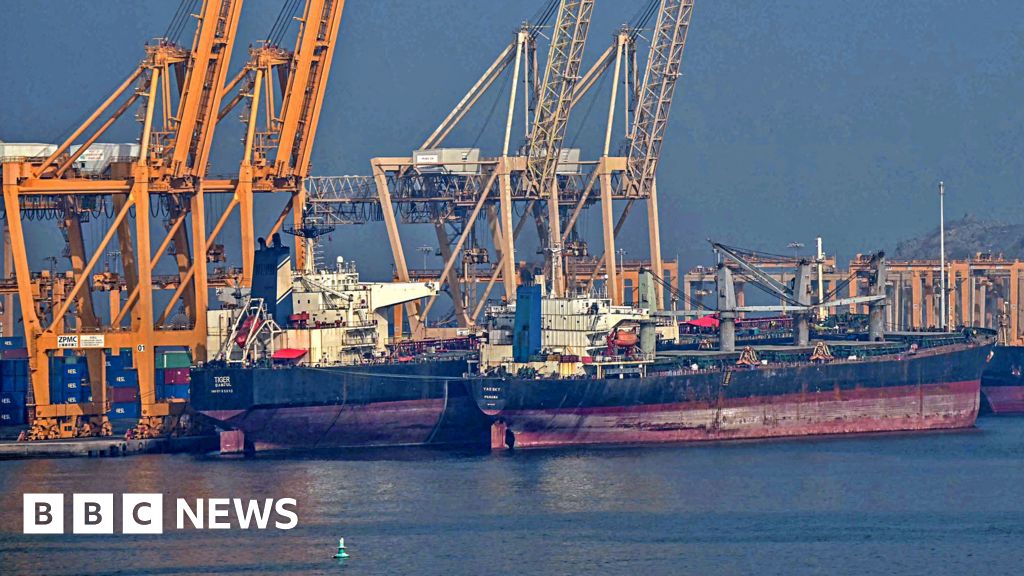
United Arab Emirates to quit oil cartel Opec

Published

on

The United Arab Emirates (UAE) is quitting the Opec and Opec+ groups of major oil producing nations next month after nearly 60 years of membership.

The UAE said its decision would help it meet growing global energy demand in the long term after recent investments to boost its production capacity.

It is seen as a blow to the cartel, with one analyst describing the exit as "the beginning of the end of Opec".

The Gulf state's energy minister said being a country with no obligation under the groups would give it more flexibility.

Opec was formed in 1960 by five countries – Iran, Iraq, Kuwait, Saudi Arabia and Venezuela – and its aim has been to co-ordinate production to provide steady revenue for its members.

The number of countries in the cartel has fluctuated over the years, but in addition to the five founding members it also includes Algeria, Equatorial Guinea, Gabon, Libya, Nigeria and the Republic of the Congo.

The UAE joined in 1967, and its departure will leave the cartel with 11 members. There are an additional 10 non-Opec members in the wider Opec+ alliance.

Saul Kavonic, head of energy research at MST Financial, said it was "the beginning of the end of Opec".

"With the UAE leaving, Opec loses about 15% of its capacity and one of its most compliant members."

The UAE's decision came as the World Bank warned the war in the Middle East has caused the biggest loss of oil supply on record.

Energy prices will rise by about a quarter on average as a result this year, it said, while it could take six months for shipping through the key Strait of Hormuz to return to pre-war levels.

"The poorest people, who spend the highest share of their income on food and fuels, will be hit the hardest," said the World Bank's chief economist Indermit Gill.

The UAE's decision to leave Opec will not have an immediate impact on global energy supply, due to the ongoing closure of the Strait of Hormuz, but could lead to a longer-term boost in output.

The country has invested heavily in boosting its production capacity and has wanted for a long time to pump more oil, economists said.

David Oxley, chief climate and commodities economist at Capital Economics, said its departure could lead to lower oil prices but higher volatility on the market in the coming decades.

He added that while the UAE is small, the implications could be major if other member states leave, or countries such as Russia and Saudi Arabia decide to ramp up production as a result.

Dr Carole Nakhle, chief executive of Crystol Energy and secretary general of the Arab Energy Club, told the BBC the UAE's decision "has been a long time in the making".

"Abu Dhabi has pursued ambitious production capacity growth, yet often felt constrained by group quotas, especially amid uneven compliance by some members," she said.

Nakhle added that Iran's actions as an Opec member were likely to have reinforced the UAE's decision.

According to the latest figures from Opec, UAE produces 2.9 million barrels of oil a day. Saudi Arabia, the de facto leader of Opec, produces nine million barrels of oil.

"Saudi Arabia will struggle to keep the rest of Opec together, and effectively have to do most of the heavy lifting regarding internal compliance and market management on its own," Kavonic said, adding other Opec members could follow suit.

"This present a fundamental geopolitical reshaping of the Middle East and oil markets," he added.

📰 மூல செய்தி (Source): https://www.bbc.com/news/articles/cj4pxwlr52yo?at_medium=RSS&at_campaign=rss
முக்கியச் செய்திகள்

Iranian group could be labelled national threat under proposed new law

Published

on

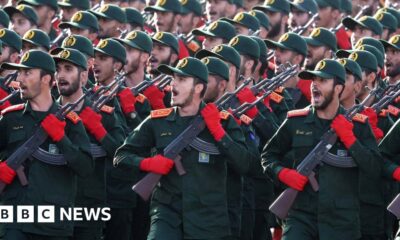
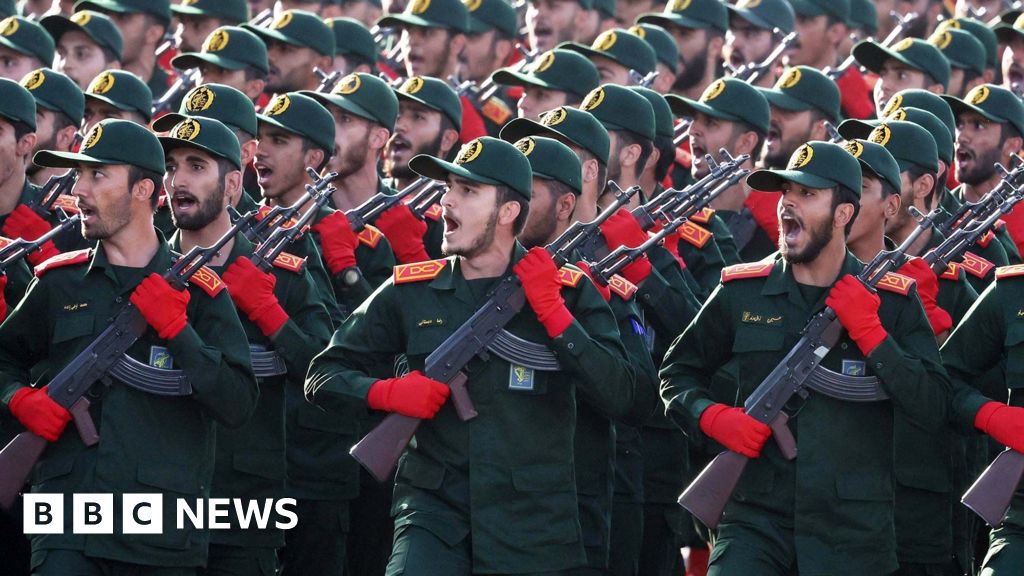
Legislation which would enable the home secretary to designate some state-linked organisations such as Iran's Islamic Revolutionary Guard Corps (IRGC) as a threat to national security could come into force as early as next month.

The National Security (State Threats) Bill was introduced to Parliament on Tuesday, and could become law within weeks.

It would allow Shabana Mahmood to designate groups involved in "foreign power threat activity" such as assassination attempts, surveillance and sabotage.

The bill also creates three new criminal offences, including one of supporting a designated state threat organisation and two of assisting and accepting material benefit from such a group.

The legislation was suggested by the government's Independent Reviewer of State Threats Legislation Jonathan Hall KC, when he concluded that it was difficult to ban state-linked groups like the IRGC as terrorist organisations.

In the last year, men have been convicted of spying on Hong Kong dissidents in the UK on behalf of China, carrying out an arson attack on a Ukrainian warehouse on behalf of the Russian group Wagner, and stabbing an opposition journalist in Wimbledon on behalf of Iran.

In those last two cases, the people who carried out the attacks were criminals who were doing it for money.

These cases showed that often hostile foreign powers were not only using their intelligence agencies to undermine security in the UK, but were also hiring criminal proxies through other state-linked organisations such as the Wagner Group and the IRGC.

It meant that the National Security Act 2023, which focused on foreign intelligence services, was quickly out of date.

Prime Minister Sir Keir Starmer said: "Where foreign states are found to be engaging in activity that threatens lives or undermines our democratic institutions, we must ensure that such actions have consequences.

"We will not tolerate hostile actors paying petty criminals to do their dirty work."

Mahmood said: "Foreign states are becoming ever more aggressive – attacking our communities, our way of life, and our institutions – and hiding their tracks behind proxies.

The bill is seen in Whitehall as a vital upgrade of the National Security Act which was only passed three years ago.

Officials say they have been seeing unprecedented levels of threat from people and groups working on behalf of foreign states.

The Director General of MI5, Sir Ken McCallum, said the security service had "tracked more than 20 potentially lethal Iran-backed plots" in just one year.

The prime minister and home secretary fast-tracked the legislation after recent attacks on Jewish targets.

Several of those were claimed by a new group calling itself Harakat Ashab al-Yamin.

The IRGC was set up after the 1979 revolution to defend the country's new Islamic system, but has since become a powerful arm of the state with a reach beyond Iran's borders.

In the impact assessment accompanying the bill, it is anticipated that 10 or fewer organisations will be designated as state threats in the first year after the legislation is passed.

Sign up for our Politics Essential newsletter to keep up with the inner workings of Westminster and beyond.

📰 மூல செய்தி (Source): https://www.bbc.com/news/articles/cgqj8xzkqqyo?at_medium=RSS&at_campaign=rss

Continue Reading

முக்கியச் செய்திகள்

Construction on fire site by Glasgow Central Station might not start for several years

Published

on

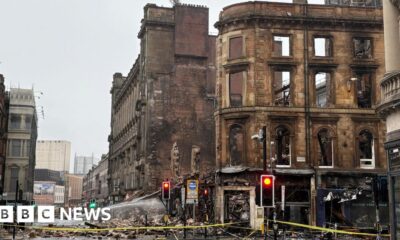
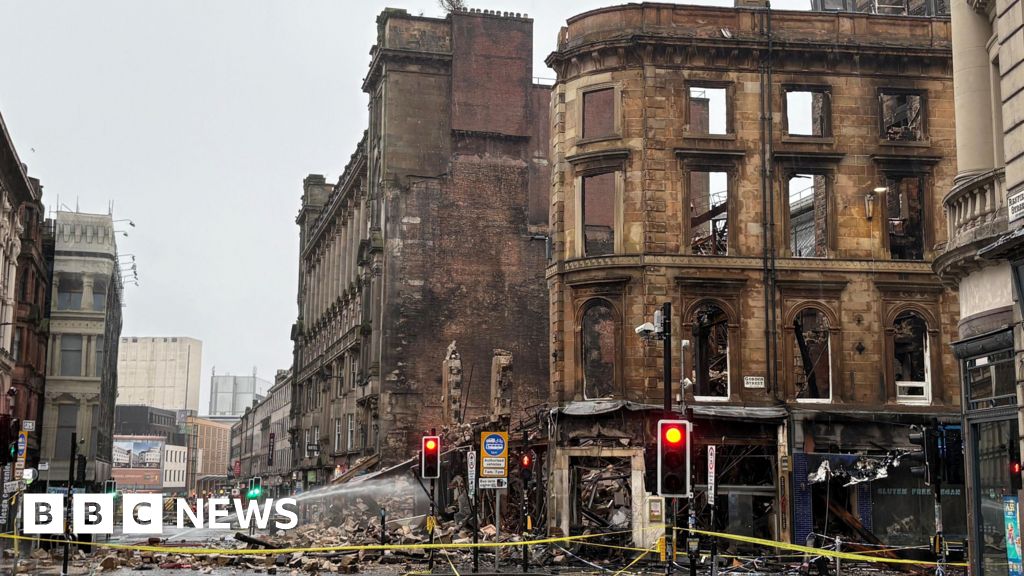
The leader of Glasgow City Council has said construction work on the Union Corner site destroyed by fire earlier this year might not begin for five or six years.

Susan Aitken added that the planning and consultation process regarding the land is likely to last until about 2030, partly because the wrecked building has a complicated ownership structure.

She made the comments at an event organised by online newspaper The Glasgow Bell last week. Glasgow City Council said it was exploring options for the site in the short, medium and long term.

A devastating fire broke out on Union Street on 8 March, initially starting in a vape shop on Union Street and then spreading further up the street.

The building is managed by property company Stelmain on behalf of Dunaskin Properties, while the ground-floor retail unit where the fire began is owned by Afton Estates.

Multiple ownership means it is likely to take time before development proposals start to be looked at.

BBC Scotland News understands the council leader's estimated timescale is shared by other senior officials within the local authority.

A spokesperson for Glasgow City Council said: "We are continuing to work on making the site safe – at this point, focusing on works on the western gable wall – with a view to reopening Union Street as quickly as possible.

"Beyond that, we are working with the owners on how the site will look and feel and how it could be used in the short, medium and long-term."

A recovery group has already been convened, which includes representatives of design and architecture companies.

Only the façade of the building at the corner of Gordon Street and Union Street was left standing after the fire in March.

The building known as Union Corner, dates back to 1851, pre-dating Glasgow Central Station which opened in 1879.

📰 மூல செய்தி (Source): https://www.bbc.com/news/articles/cd7wx7409g7o?at_medium=RSS&at_campaign=rss

Continue Reading

முக்கியச் செய்திகள்

Hidden camera found in government building

Published

on

A hidden camera has been discovered in a government building in the heart of Westminster.

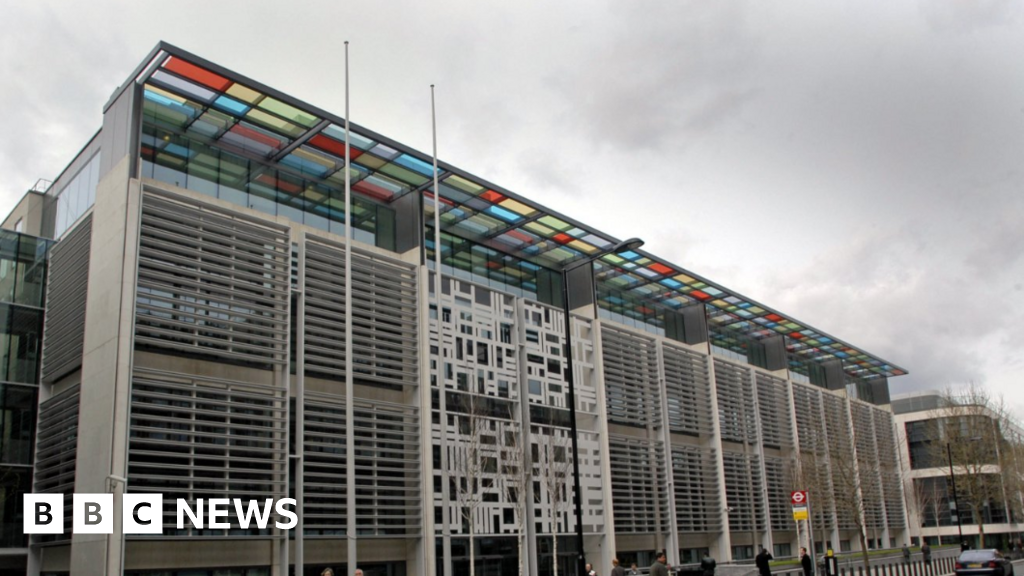
The electronic device was found in the communal area of the complex on Marsham Street, where the Home Office and Ministry of Housing, Communities and Local Government (MHCLG) are based.

The i newspaper, which first reported the story, said it was found behind a ceiling panel within the last two months, and security services have been informed.

Home Office sources say it was found in MHCLG's part of the building, away from ministerial offices. An MHCLG spokesperson said: "We do not comment on security matters."

The building is the base for the Home Office, responsible for policing in England and Wales and national security, and MHCLG, which is responsible for housing and planning policy in England.

Tory shadow Cabinet Office minister Alex Burghart said: "This is a serious incident that demands an urgent investigation.

"The discovery of a hidden camera inside a building that occupies the Home Office and other departments raises questions about the security of government departments and those seeking to undermine them.

"The public deserves answers. We urgently need to know who was responsible, how long this device was in place and whether any sensitive or classified information has been compromised."

The Home Office declined to comment. The prime minister's spokesman declined to comment, referring reporters to the earlier statement from MHCLG.

Sign up for our Politics Essential newsletter to read top political analysis, gain insight from across the UK and stay up to speed with the big moments. It'll be delivered straight to your inbox every weekday.

📰 மூல செய்தி (Source): https://www.bbc.com/news/articles/c802r4xnkrxo?at_medium=RSS&at_campaign=rss
Continue Reading

Trending

Copyright © 2024 by 7Tamil Media, All rights reserved.